Why this space matters
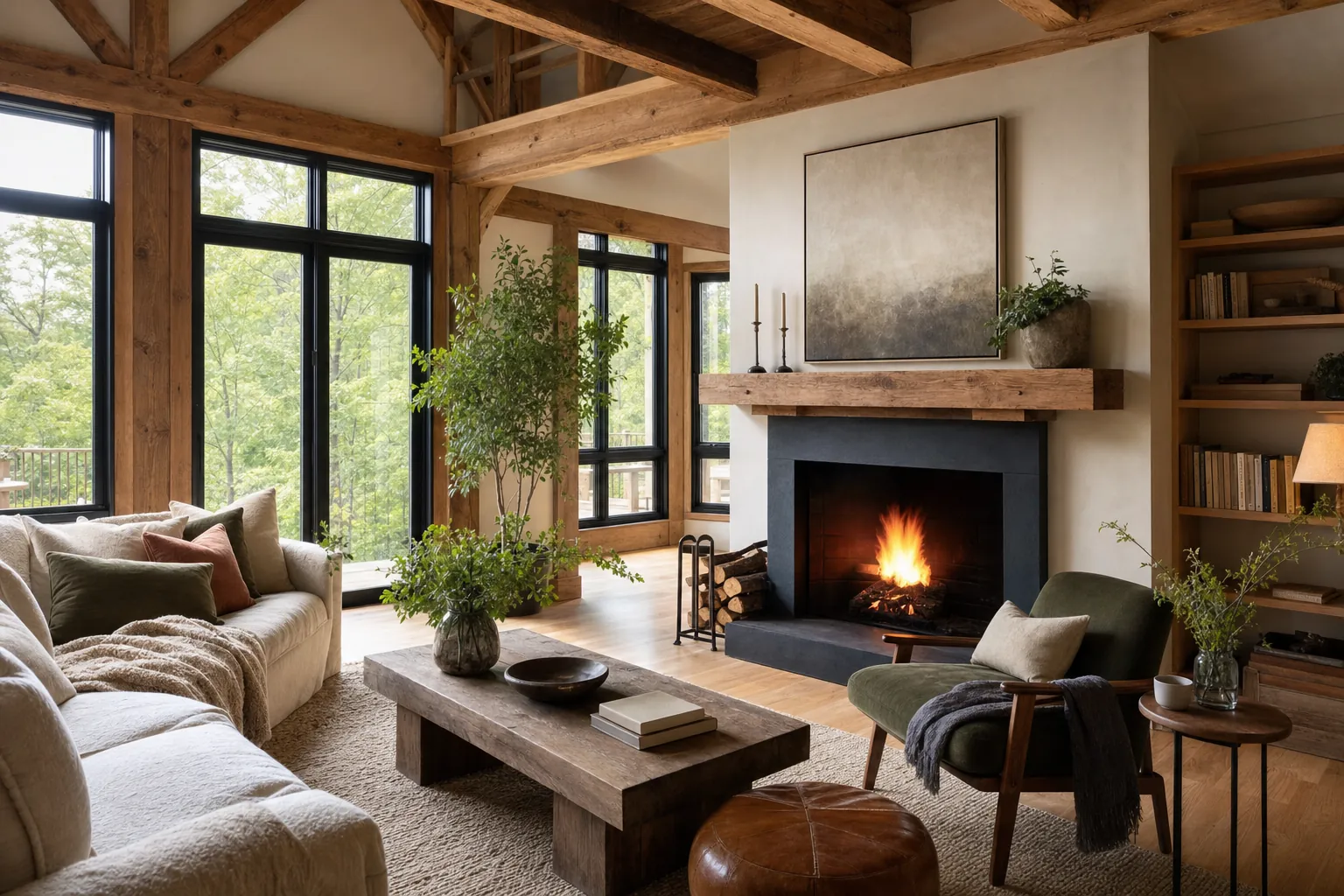
For centuries people gathered around a hearth, fire for light, warmth, food, and company. Gathering around a fire encouraged storytelling, games, and sharing. In most homes the television has replaced the hearth, and that changes the family dynamic.
The living room is where we tell the story of our family. It reflects our relationships with each other, and it is where we invite guests to share our company and appreciate our hospitality. It is also an excellent place to show your core values. That is why we treat the living room, not the kitchen, as the true Heart of the Home: it nourishes the stories and relationships we share with one another.
What most plans do with it
Living rooms are usually laid out around a focal point, a fireplace, a television, a view, and furnished to fill the resulting shape. What often goes unexamined is whether the arrangement supports people facing each other, and whether there is anywhere to be near the group without being in it.
What changes when it is designed consciously
Seating that lets people face one another, not only a screen. A second position in the room, a window seat or a chair slightly apart, for the person who wants company without conversation.
Room for the objects that carry your family's story, given real places rather than leftover surfaces. And a scale that feels generous when everyone is home and still feels right with two people in it on a Sunday.