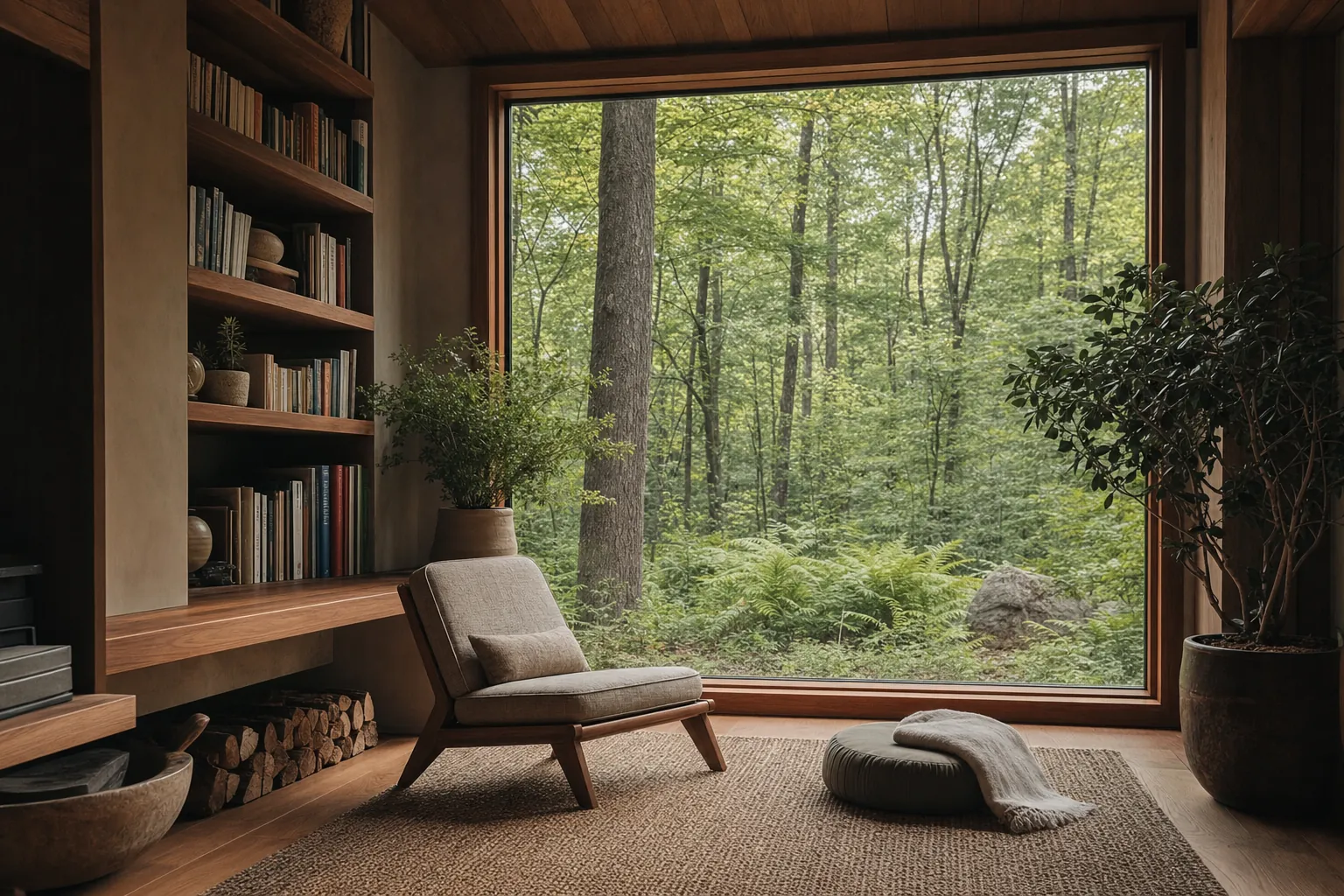
Why this space matters
Inner Development is the counterpart to Outer Development. One keeps the body growing; the other keeps the person growing. Reading, study, reflection, prayer, meditation, planning, or simply sitting somewhere quiet enough to hear yourself think, the form varies enormously, and the need does not.
It is the space most often left out of a plan entirely, and the one people are most surprised to find they use.
What most plans do with it
There is no line item for it in the standard program. When it appears at all, it appears as a home office, which is a different thing, a place for work rather than a place for growth. Everything else gets borrowed: a corner of the bedroom, an armchair, a moment before everyone else wakes up.
What changes when it is designed consciously
It can be modest. A window seat, an alcove, a small room. What matters is that it is protected, from noise, from traffic, from being used for something else.
Quiet, first. Then light, and something worth looking at. A door or a threshold, so the space can be entered rather than merely occupied. And enough separation that using it does not require the rest of the house to cooperate.
Given a clear purpose and kept for it, the space becomes tuned to the activity, and returning to it gets easier every time.